 Art
Art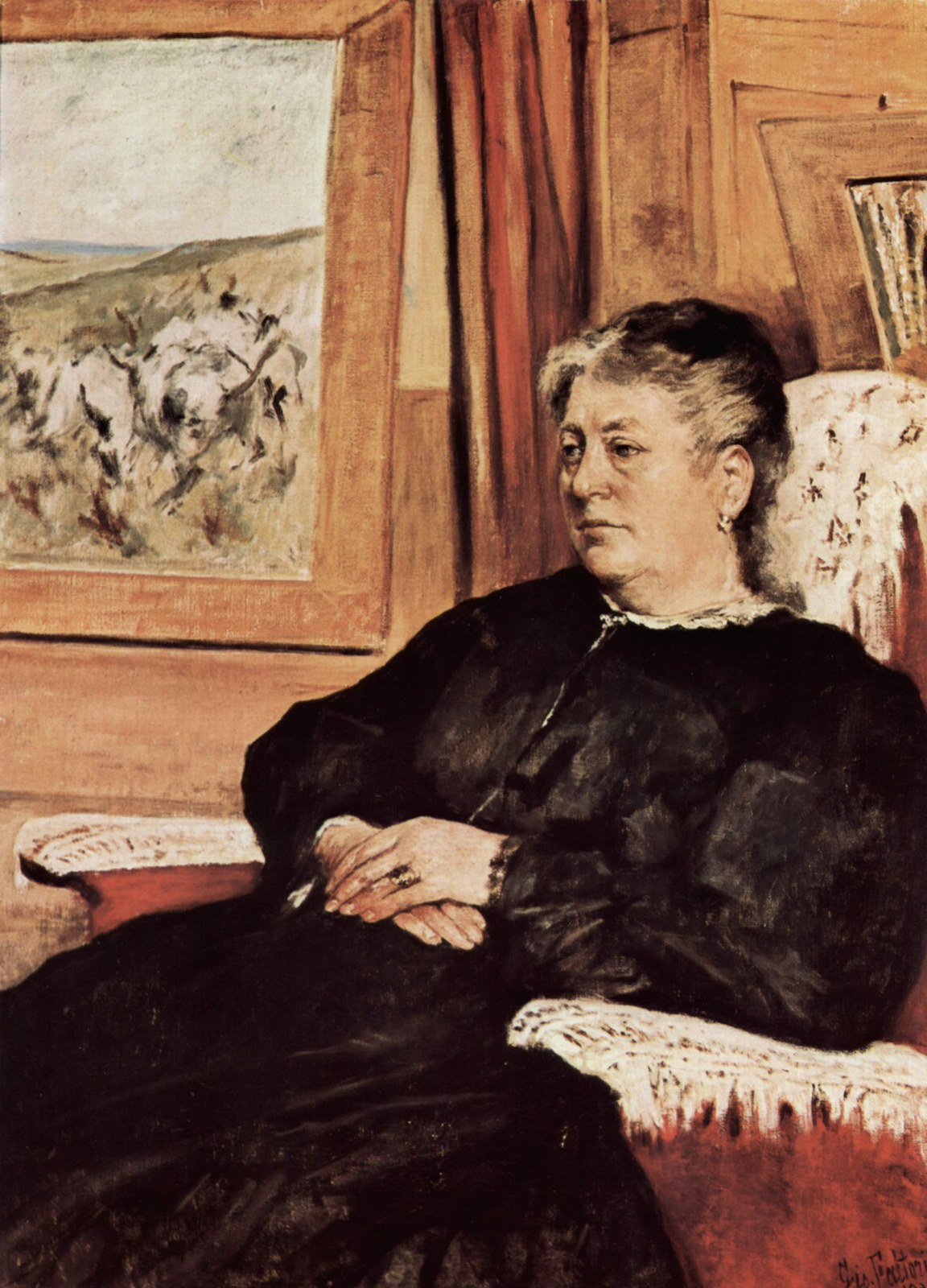
Italian: Ritratto della terza mogliePortrait of the third wife. Image: Giovanni Fattori · Public domain · Wikimedia Commons, accessed 2026-08-04
The Macchiaioli were a group of Italian painters, primarily based in Florence, active from roughly 1855 to 1880, whose name derives from the Italian word macchia, meaning a patch, spot, or stain of color. Rather than building form through careful academic line and gradual tonal modeling, they constructed their compositions from bold, contrasting patches of light and dark, applied with a directness that scandalized more conservative critics but anticipated some of the same formal concerns that would soon animate French Impressionism.
The group's paintings typically depict contemporary Tuscan life: rural landscapes under strong Mediterranean sunlight, scenes from the Italian Risorgimento's military campaigns, and everyday middle-class and peasant domestic life, all rendered with a keen attention to the actual, often harsh, effects of Italian light and shadow. Giovanni Fattori's military and rural scenes, built from strong tonal contrast and simplified form, exemplify the macchia method at its most disciplined; Silvestro Lega's quieter domestic interiors apply the same principle of light-and-shadow construction to gentler, more intimate subject matter.
The Macchiaioli rebelled against the polished, idealized finish and academic subject hierarchy of the Italian art establishment, much as their French contemporaries in Realism and the Barbizon School rebelled against the Paris Salon. They gathered informally at the Caffè Michelangiolo in Florence to debate their ideas, sharing with Barbizon and early Realist painters a commitment to working from direct observation of contemporary life and landscape rather than historical or mythological convention, though the Macchiaioli's emphasis on bold tonal patches as the fundamental unit of pictorial construction was a distinctly Italian formal innovation.
The Macchiaioli matter as Italy's most significant nineteenth-century contribution to the broader European movement away from academic convention toward direct observation and modern subject matter. Their work is often noted for anticipating aspects of Impressionism's formal concerns—the primacy of observed light, a loosened relationship to academic finish—despite developing largely independently in Florence, giving them a distinct place in the international story of how nineteenth-century painting broke from academic tradition.
What defines Macchiaioli
Construction through tonal patches
Compositions are built from bold, simplified areas of contrasting light and dark—the macchia—rather than academic line and gradual modeling, giving the paintings a direct, almost abstracted structural clarity.
Strong Mediterranean light and shadow
Paintings capture the harsh, high-contrast quality of Italian sunlight, often depicted at midday, with deep shadow used as a structural and compositional element rather than mere tonal transition.
Contemporary Tuscan subject matter
Scenes depict rural landscape, peasant and middle-class domestic life, and episodes from the Italian Risorgimento's military campaigns, favoring observed contemporary reality over historical or mythological themes.
Small-scale, direct studies
Many works, especially early studies, are modest in size and painted with an immediacy suggesting direct observation, sometimes outdoors, closer to a sketch's spontaneity than a finished academic canvas.
Simplified, unsentimental figures
Figures are rendered with economy rather than idealized academic finish, their forms emerging from tonal contrast rather than careful linear contour.
Restrained, earthy Tuscan palette
Colors tend toward warm ochres, umbers, and deep greens characteristic of the Tuscan countryside, punctuated by strong areas of white or dark shadow rather than the brighter chromatic range later Impressionists would adopt.
History
The Macchiaioli coalesced in Florence in the mid-1850s among a group of young painters who met regularly at the Caffè Michelangiolo to debate art and politics, many of them also personally involved in the Italian Risorgimento, the movement for Italian unification and independence. Their shared frustration with the Accademia di Belle Arti's rigid academic teaching and its preference for historical and mythological subject matter led them toward direct observation of contemporary Tuscan landscape and life.
The group's name was originally coined around 1862 by a hostile critic as a term of mockery, referencing their reliance on bold macchie, or patches, of tone rather than conventional academic drawing and finish; as with several other movement names in art history, the term was subsequently adopted by the painters themselves. Giovanni Fattori, Silvestro Lega, and Telemaco Signorini emerged as the group's most significant and enduring figures, each developing the shared macchia principle in somewhat different directions—Fattori toward military and rural scenes of striking tonal starkness, Lega toward gentler domestic interiors, Signorini toward urban and social subject matter.
The Macchiaioli's development paralleled, but was largely independent of, the roughly contemporary emergence of Realism and Impressionism in France; direct influence between the groups was limited, though some Macchiaioli painters, including Signorini, traveled to Paris and had some awareness of French developments. The Italian critic Diego Martelli became an important champion and theorist for the group, helping articulate and defend their formal innovations.
By the 1880s, the original Macchiaioli group's cohesion had faded as its members aged, and younger Italian painters increasingly looked toward Impressionism and Divisionism for their models of modern painting. For much of the twentieth century the movement remained relatively underrecognized outside Italy, overshadowed internationally by its French contemporaries, though Italian art history has long regarded it as a central and formally significant chapter in the country's nineteenth-century painting, and international scholarly and market attention has grown considerably in recent decades.
Key works
| Work | Artist | Year | Why it matters |
|---|---|---|---|
| The Rotunda of Palmieri | Giovanni Fattori | 1866 | A study of seated women under a garden pavilion, built from bold, simplified patches of light and shadow characteristic of the macchia method. |
| The Visit | Silvestro Lega | 1868 | A quiet domestic interior scene demonstrating the macchia principle applied to gentle, intimate middle-class subject matter. |
How to make art in this style
Painting in the Macchiaioli Style Today
Palette: Use warm, earthy Tuscan tones—ochre, umber, olive green, and terracotta—punctuated by strong passages of bright white sunlight and deep, near-black shadow. Keep the overall range relatively restrained and naturalistic rather than reaching for the brighter chromatic variety later Impressionists would use.
Composition: Build the image from a small number of large, simplified tonal patches rather than intricate detail or careful academic line—think in terms of where the strongest light meets the strongest shadow, and let that contrast define the composition's basic structure before adding refinement. Favor everyday Tuscan or rural subject matter: a sunlit courtyard, a country road, figures resting under strong midday light.
Brushwork and technique: Apply paint directly and economically, letting broad, flat patches of tone do the structural work rather than building form through gradual blended modeling. Resist the temptation to smooth transitions between light and shadow; the method's power comes from decisive tonal contrast, not soft gradation.
Subjects: Depict scenes of ordinary contemporary Italian life—rural labor, domestic interiors, military or Risorgimento-era subjects, or simple landscape under strong sun. Keep figures simplified and unsentimental, defined more by their silhouette and tonal placement within the scene than by fine linear detail, and let the specific quality of harsh Mediterranean light stand as a central subject in its own right.
Legacy
The Macchiaioli's principal legacy is their place as Italy's independent and largely parallel contribution to the broader nineteenth-century European shift away from academic convention toward direct observation of light, landscape, and contemporary life. Their formal method—building a picture from bold tonal patches rather than line and gradual modeling—anticipated, without directly causing, some of the same structural concerns Impressionism would soon pursue in France.
Within Italy, the Macchiaioli's example influenced subsequent generations of Italian landscape and figure painters and helped establish Florence and Tuscany as an enduring subject for modern Italian painting, a status that persists in Italian regional art culture today. Their engagement with the Risorgimento also ties the movement closely to the political story of Italian unification, giving their work continued significance within Italian national cultural memory beyond its purely formal innovations.
Internationally, the Macchiaioli remained comparatively little known outside specialist circles for much of the twentieth century, overshadowed by the greater visibility of French Impressionism, but recent decades have seen renewed international exhibition interest and scholarly attention, increasingly framing the movement as an important, formally inventive parallel development rather than a minor regional footnote to the French story. Their example remains a useful reminder that the nineteenth century's turn toward direct observation and away from academic finish was a broader European phenomenon, not a solely French one.
Frequently asked questions
What does Macchiaioli mean?
Macchiaioli derives from the Italian word macchia, meaning a patch, spot, or stain of color, referring to the group's method of building compositions from bold contrasting patches of light and dark rather than academic line and finish.
Who were the Macchiaioli?
The Macchiaioli were a group of Italian painters based mainly in Florence, active from about 1855 to 1880, including Giovanni Fattori, Silvestro Lega, and Telemaco Signorini, who met at the Caffè Michelangiolo to debate art and politics.
How does Macchiaioli compare to Impressionism?
Both movements broke from academic finish and idealization in favor of direct observation of light and contemporary life, and developed on roughly parallel timelines, but the Macchiaioli worked largely independently in Florence and emphasized bold tonal patches, while French Impressionism emphasized broken color and brushwork.
What subjects did the Macchiaioli paint?
They painted contemporary Tuscan landscape, rural and domestic life, and scenes from the Italian Risorgimento's military campaigns, favoring observed reality over historical or mythological subject matter.
Why is the Macchiaioli movement less famous internationally than Impressionism?
The Macchiaioli developed somewhat independently of the French avant-garde and remained comparatively little known outside Italy for much of the twentieth century, though international scholarly and exhibition interest has grown significantly in recent decades.