 Art
Art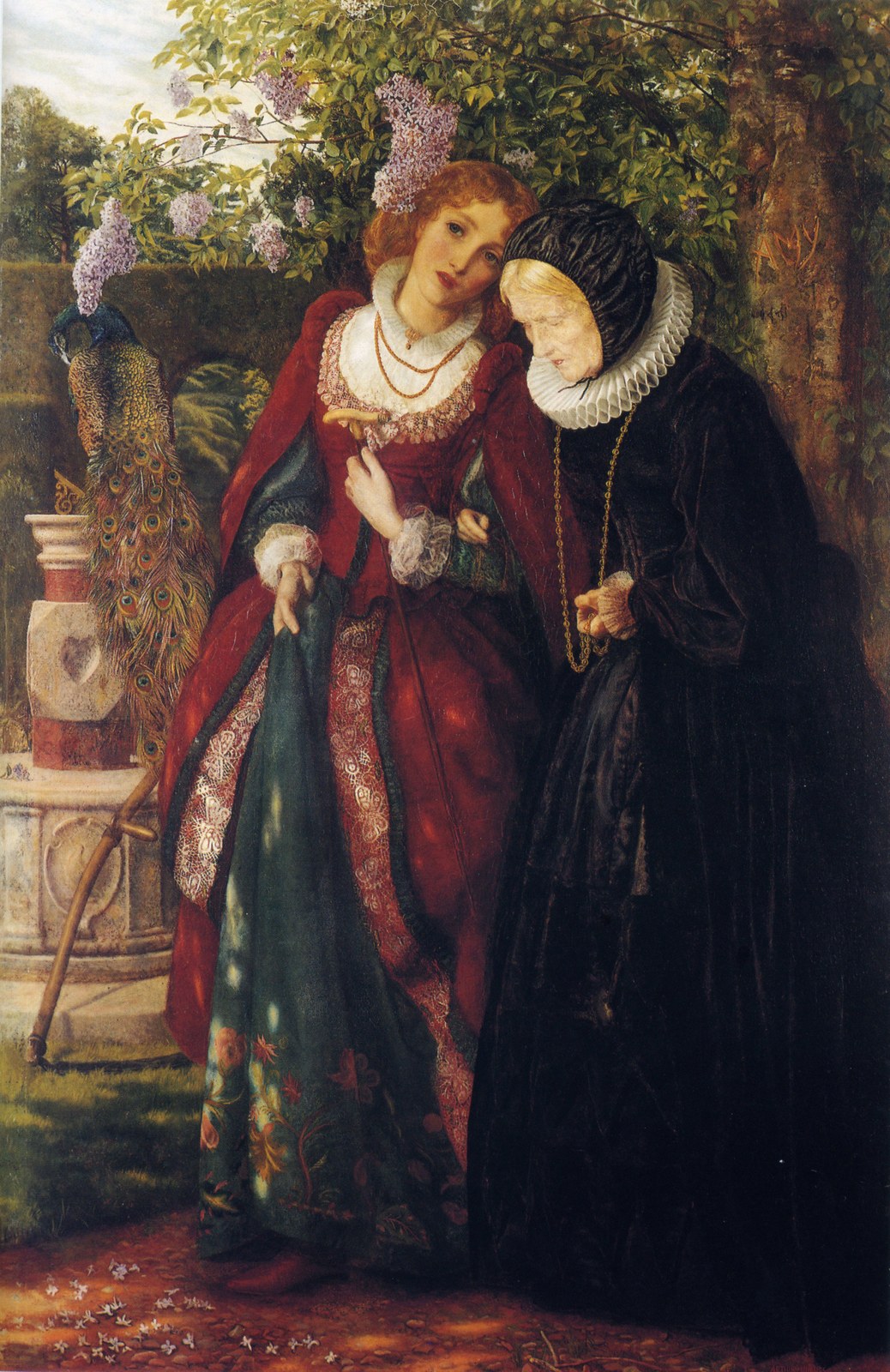
Silver and Gold. Image: Arthur Hughes · Public domain · Wikimedia Commons, accessed 2026-08-04
The Pre-Raphaelite Brotherhood was a group of English painters, poets, and critics founded in London in 1848 who rejected what they saw as the formulaic idealization of academic painting since the High Renaissance, deliberately looking instead to the sincerity and detailed observation they associated with Italian and Flemish art before Raphael. The name itself was a provocation, aimed squarely at the Royal Academy's veneration of Raphael as the pinnacle of painterly achievement.
Pre-Raphaelite paintings are immediately recognizable for their intense, jewel-like color, achieved partly through painting onto a wet white ground that made pigments glow with unusual luminosity; their obsessive, almost botanical attention to natural detail, particularly foliage and flowers rendered leaf by leaf; and their preference for literary, medieval, biblical, and Arthurian subject matter, often featuring red-haired, full-lipped women in flowing dress cast as tragic heroines, saints, or mythic figures. Dante Gabriel Rossetti's sensuous, symbolic female portraits, John Everett Millais's meticulously observed Ophelia, and William Holman Hunt's morally freighted religious and allegorical scenes each represent different facets of the shared project.
The Brotherhood rebelled against the Royal Academy's academic hierarchy and its associated taste for smooth, generalized idealization, insisting instead on sharp-focus truth to nature—every leaf, every fold of fabric rendered with equal, unforgiving clarity—combined with high moral and emotional seriousness drawn from literature, religion, and medieval legend. This combination of scientific-feeling precision with intense romantic and symbolic content set the group apart from both academic painting and from the softer atmospheric tendencies of contemporary French movements.
The Pre-Raphaelite Brotherhood matters because it offered Victorian England an alternative to academic formula that was neither a retreat into pure decoration nor a turn toward unglamorous Realism, but a heightened, intensely colored, literary vision of beauty and moral seriousness. Its influence extended well beyond painting into textile design, book illustration, and the broader Arts and Crafts movement through the group's close associate William Morris, making it one of the most visually and culturally influential British art movements of the nineteenth century.
What defines Pre-Raphaelite Brotherhood
Jewel-bright, luminous color
Paintings were often executed onto a wet white ground, a technique that made colors appear unusually vivid and glowing compared to the darker, more muted tonal palette of academic painting.
Minute, near-botanical natural detail
Foliage, flowers, and fabric are rendered with obsessive precision, individual leaves and petals often painted from direct observation of actual plants, giving backgrounds an almost scientific specificity.
Literary and medieval subject matter
Scenes draw heavily on Shakespeare, Dante, Arthurian legend, the Bible, and medieval romance, favored over classical mythology for its perceived emotional sincerity and moral seriousness.
Idealized, symbolic female figures
Women are frequently depicted with flowing red or auburn hair, full lips, and elongated features, cast as tragic heroines, saints, or symbolic embodiments of beauty and fate.
Sharp, uniform focus
Unlike academic painting's selective emphasis, Pre-Raphaelite canvases often render foreground and background with equally sharp clarity, refusing conventional atmospheric softening or hierarchy of detail.
Moral and symbolic density
Objects within a scene frequently carry deliberate symbolic meaning—specific flowers, colors, or gestures encode moral or narrative significance intended for careful, literate viewing.
History
The Pre-Raphaelite Brotherhood was founded in London in 1848 by three young painters—Dante Gabriel Rossetti, John Everett Millais, and William Holman Hunt—who shared frustration with the Royal Academy's rigid teaching and its veneration of Raphael and the High Renaissance tradition as the unsurpassable standard. They adopted the initials PRB, signing early works with the secret monogram, and were soon joined by additional members and close associates, expanding the group's reach across painting, poetry, and criticism.
Early Pre-Raphaelite works provoked significant hostility when first exhibited, with critics, including notably Charles Dickens, attacking Millais's Christ in the House of His Parents for what they saw as ugly, almost blasphemous realism applied to a sacred subject. The influential critic John Ruskin's public defense of the group, praising their truth to nature, was instrumental in turning critical opinion in their favor and establishing Pre-Raphaelitism as a serious artistic force rather than a passing eccentricity.
The original Brotherhood as a formal group had largely dissolved by the mid-1850s, as members pursued increasingly divergent paths, but its influence entered a vigorous second phase through Rossetti's later, more overtly sensuous and symbolic work and through a younger generation, especially Edward Burne-Jones, who developed a dreamier, more explicitly mythic and decorative strand of the style closely allied with the emerging Aesthetic Movement. William Morris, a close associate, extended Pre-Raphaelite principles into textile, wallpaper, and book design, helping found the Arts and Crafts Movement.
By the 1890s, Pre-Raphaelitism's direct influence had been absorbed into and superseded by Symbolism and Art Nouveau across Europe, both of which shared its interest in literary subject matter, symbolic femininity, and decorative intensity. The movement fell out of critical fashion for much of the early twentieth century, dismissed by modernist critics as sentimental and overworked, before undergoing a significant popular and scholarly revival from the mid-twentieth century onward that restored it to a central place in the story of Victorian art.
Key works
| Work | Artist | Year | Why it matters |
|---|---|---|---|
| Ophelia | John Everett Millais | 1852 | A meticulously observed depiction of Shakespeare's drowning heroine amid painstakingly rendered riverbank flora, among the movement's most celebrated works. |
| Christ in the House of His Parents | John Everett Millais | 1850 | A controversial, unidealized depiction of the Holy Family in a carpenter's workshop that provoked fierce contemporary criticism for its perceived lack of reverence. |
| The Awakening Conscience | William Holman Hunt | 1853 | A morally charged scene of a kept woman's sudden realization, dense with symbolic objects encoding its narrative meaning. |
| Beata Beatrix | Dante Gabriel Rossetti | 1870 | A symbolic, dreamlike portrait blending Dante's Beatrice with Rossetti's late wife Elizabeth Siddal, exemplifying his later sensuous, elegiac style. |
| The Golden Stairs | Edward Burne-Jones | 1880 | A procession of dreamlike female figures descending a staircase, reflecting the movement's later, more decorative and mythic second generation. |
How to make art in this style
Painting in the Pre-Raphaelite Style Today
Palette: Use intense, saturated, jewel-like color—deep reds, emerald greens, ultramarine blues, and rich golds—applied with enough clarity and luminosity to feel almost lit from within. If working traditionally, painting onto a smooth white ground before adding thin, luminous glazes of color helps achieve the period's characteristic glow.
Composition: Center the composition on a single significant figure or a small, emotionally charged group, often drawn from literature, myth, or medieval legend. Fill the background and surrounding space with dense, detailed natural elements—flowers, foliage, fabric pattern—rendered with the same sharp focus as the main figure, rather than fading into soft atmospheric blur.
Brushwork and technique: Work with fine, controlled detail throughout the canvas; avoid loose or gestural brushwork in favor of precise, almost miniaturist rendering, particularly in botanical elements. Aim for uniform sharpness across the picture plane rather than the selective focus of academic or naturalistic painting, since Pre-Raphaelite work deliberately resists conventional visual hierarchy.
Subjects: Draw on literary, medieval, biblical, or mythic sources—Arthurian legend, Shakespeare, Dante, or biblical narrative—favoring emotionally and morally charged moments. Depict figures, especially women, with flowing hair, statuesque poses, and richly patterned, flowing drapery, and consider embedding specific objects—particular flowers, colors, or gestures—as deliberate symbolic clues to the scene's deeper meaning.
Legacy
The Pre-Raphaelite Brotherhood's most direct legacy runs through the Arts and Crafts Movement, initiated substantially by close associate William Morris, which carried Pre-Raphaelite ideals of craftsmanship, natural observation, and medieval inspiration into textiles, furniture, and book design, reshaping British design culture well beyond painting. Its emphasis on symbolic, literary femininity and dreamlike mood also fed directly into Symbolism and Art Nouveau across Europe.
The movement's intense color, obsessive natural detail, and literary seriousness fell out of critical favor for much of the early twentieth century, dismissed by modernist taste as overworked and sentimental, but experienced a substantial revival from the 1960s onward, aided by renewed scholarly interest and popular fascination with its striking, instantly recognizable female imagery.
Today, Pre-Raphaelite visual conventions—flowing hair, jewel-toned color, dense floral symbolism, literary and mythic subject matter—remain a recognizable touchstone across fashion photography, book cover illustration, and fantasy art, where the movement's combination of sensuous beauty and narrative density continues to resonate. Its insistence on minute, truthful natural detail combined with heightened emotional and symbolic content offers a durable alternative to both academic idealization and unglamorous realism, a middle path many illustrators and fantasy artists still draw on.
Frequently asked questions
What is the Pre-Raphaelite Brotherhood?
The Pre-Raphaelite Brotherhood was a group of English painters founded in London in 1848 who rejected academic idealization inherited from Raphael's era in favor of intense color, minute natural detail, and literary and medieval subject matter.
Who founded the Pre-Raphaelite Brotherhood?
The group was founded by Dante Gabriel Rossetti, John Everett Millais, and William Holman Hunt, who were soon joined by other members and close associates including Edward Burne-Jones in a later generation.
Why is it called Pre-Raphaelite?
The name reflects the group's admiration for the sincerity and detail of Italian and Flemish art produced before Raphael and the High Renaissance, which they saw the Royal Academy as venerating at the expense of genuine artistic truth.
What is the difference between the Pre-Raphaelites and the Aesthetic Movement?
The Pre-Raphaelites emphasized literary narrative, moral seriousness, and symbolic natural detail, while the later Aesthetic Movement, partly grown from Pre-Raphaelite roots, prioritized pure visual beauty and decorative harmony over storytelling or moral content, under the banner of art for art's sake.
Who defended the Pre-Raphaelites against early criticism?
The influential critic John Ruskin publicly defended the group's commitment to truth to nature after early hostile reviews, playing a significant role in establishing their critical reputation.