 Art
Art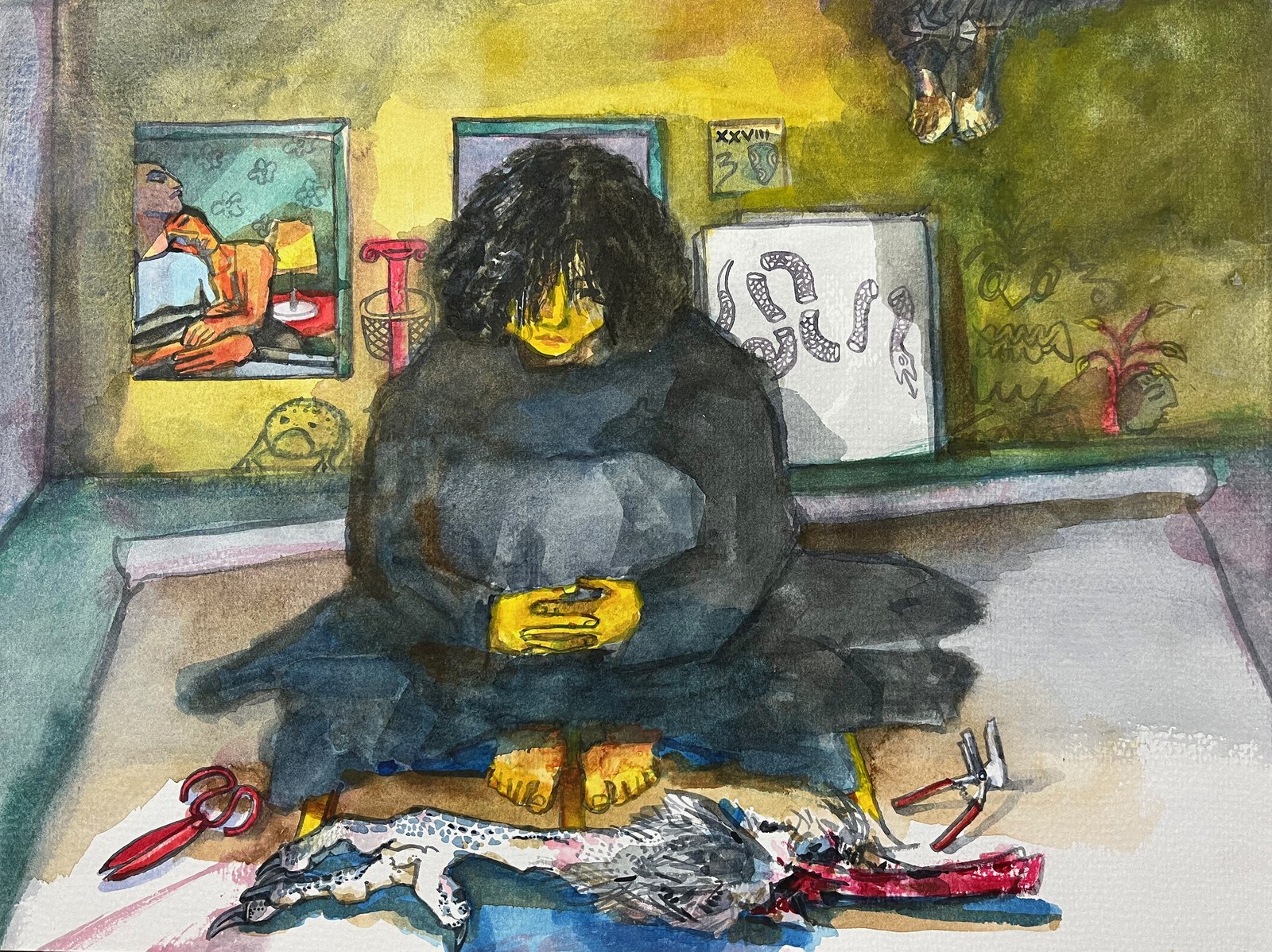
Conjure Woman. Image: DavidGodber47 · CC BY 4.0 · Wikimedia Commons, accessed 2026-08-04
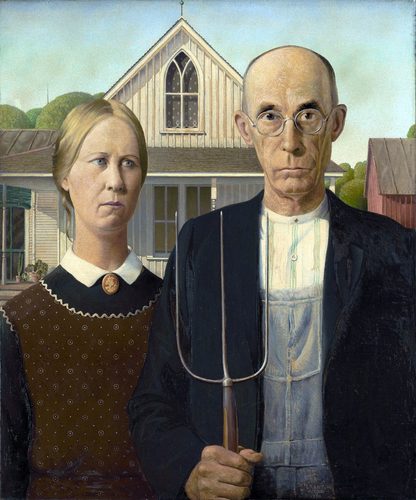
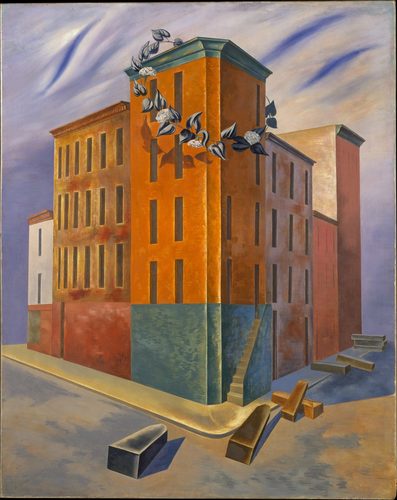
Magic Realism describes a strain of twentieth-century painting that treats the everyday world with such exacting, almost photographic precision that ordinary scenes begin to feel uncanny. The term was coined in 1925 by the German art critic Franz Roh to describe painters returning to sharp-focus, objective representation after the emotional distortions of Expressionism — an approach closely tied to the parallel German movement Neue Sachlichkeit, or New Objectivity. The label later crossed the Atlantic, applied to American painters such as Andrew Wyeth and Ivan Albright, and to Latin American artists, most famously Frida Kahlo, whose densely symbolic self-portraits fuse documentary clarity with personal mythology.
What separates Magic Realism from Surrealism, its closest relative, is restraint. Surrealist painters distort anatomy, melt objects, and stage impossible dream-logic collisions. Magic Realist painters keep the world coherent — spatially rational, physically plausible — and let the strangeness emerge instead from mood, isolation, symbolic charge, and the sheer intensity of the looking. A farmhouse seen from a hillside, a woman crawling through a field, a decaying figure caught mid-thought: nothing here defies physics, yet everything feels weighted with unspoken meaning.
The movement pushed back against two opposing forces at once: the sentimental idealism of academic painting, and the increasingly abstract, non-representational direction of high modernism. Its practitioners insisted that representation itself, pursued with enough patience and precision, could carry as much psychological depth as any abstraction or dream image. The Museum of Modern Art's 1943 exhibition "American Realists and Magic Realists" gave the American strand institutional recognition and helped fix the term in art-historical usage.
Magic Realism never coalesced into a formal group with a manifesto; it remained a loose sensibility shared across otherwise very different artists working in different countries and decades. Its lasting importance lies in demonstrating that meticulous realism was not, as many modernists claimed, a spent or reactionary mode — it could still be a vehicle for genuine strangeness and symbolic weight, keeping a thread of detail-obsessed figurative painting alive through decades dominated by abstraction.
What defines Magic Realism
Hyperclear, obsessive detail
Surfaces are rendered with near-photographic exactness — every blade of grass, wrinkle, or wood grain painted with patient, almost forensic attention. This precision itself becomes part of the unsettling effect.
Ordinary subjects, extraordinary mood
Farmhouses, rural figures, still lifes, and domestic interiors are treated as if they held a secret. The subject matter is mundane; the atmosphere is charged with tension or melancholy.
Rational, coherent space
Unlike Surrealism, perspective, gravity, and anatomy remain logically consistent. There is no melting or impossible juxtaposition — the world stays physically believable even as it feels psychologically off.
Muted, controlled palette
Earthy browns, ochres, and grays dominate, rather than Surrealism's saturated dream colors. The restrained color scheme reinforces a mood of quiet, watchful stillness.
Cool, unemotional handling
Brushwork is tight and controlled rather than expressive or gestural, creating a detached, almost clinical surface that contrasts with the intense feeling embedded in the subject.
Personal and symbolic content
Especially in Latin American practice, autobiography and private symbolism are encoded into realistic imagery, turning self-portraiture into a form of coded testimony.
History
The term originates with Franz Roh's 1925 book Nach-Expressionismus (Magischer Realismus), which described German painters abandoning Expressionist distortion for sharp, objective observation — a sensibility overlapping heavily with Neue Sachlichkeit. Around the same time, the Italian writer Massimo Bontempelli was independently developing a related idea, realismo magico, for a similarly uncanny, clear-eyed art and literature.
In the United States, the label was applied retrospectively and contemporaneously to painters working in a meticulous, tempera-based realism charged with psychological tension — Andrew Wyeth, Ivan Albright, Paul Cadmus, and George Tooker among them. The Museum of Modern Art's 1943 exhibition "American Realists and Magic Realists" gave the American branch a defining institutional moment and cemented the term's use in English-language criticism.
In Latin America, the label attached itself to artists including Frida Kahlo, whose intensely personal, precisely rendered paintings mixed physical suffering, Mexican folk imagery, and private symbolism — though Kahlo resisted having any dream-based label attached to her work, famously rejecting the Surrealist tag with the remark that she never painted dreams but her own reality. The term would go on to have a far larger afterlife in literature, where "magical realism" became closely associated with Latin American novelists later in the century.
Magic Realism was never an organized movement with manifestos or group exhibitions binding its members together; it functioned more as a shared sensibility recognized by critics across otherwise unconnected artists. As a distinct label for painting it faded by the 1960s as Pop Art and other movements captured critical attention, though individual painters — Wyeth most prominently — continued working in this vein for decades, keeping its patient, detail-driven realism visible in American art well past its formal "end" date.
Key works
| Work | Artist | Year | Why it matters |
|---|---|---|---|
| Christina's World | Andrew Wyeth | 1948 | A woman in a field gazes toward a distant farmhouse, its tempera precision and eerie stillness making it the movement's best-known image. |
| Into the World There Came a Soul Called Ida | Ivan Albright | 1930 | A meticulously decayed figure meditates on aging and mortality, rendered with obsessive, unsparing detail. |
| The Two Fridas | Frida Kahlo | 1939 | A double self-portrait fusing autobiography, heartbreak, and symbolic anatomy into one precisely painted image. |
| Self-Portrait with Thorn Necklace and Hummingbird | Frida Kahlo | 1940 | Personal suffering is encoded through symbolic creatures and objects, rendered with flat, exacting clarity. |
How to make art in this style
Palette. Work in muted, earthy tones — umber, ochre, olive, grayed blues — and avoid saturated or theatrical color. The restraint of the palette is what keeps the mood quiet rather than dreamlike.
Composition. Isolate a single figure or object within a spare, believable setting: an empty field, a plain interior, a solitary house. Leave generous negative space; the emptiness around the subject does much of the emotional work. Keep perspective and scale logically consistent — nothing should defy physical plausibility.
Brushwork and technique. Build the image slowly, in thin, controlled layers, favoring a smooth, tight finish over visible gesture. Egg tempera, historically favored by Wyeth for its fine, dry precision, rewards patient, small-brush work; if using oil, keep strokes blended and surfaces even. Render texture — skin, wood, fabric, grass — with more detail than the eye would naturally register, so the image feels sharper than ordinary sight.
Subjects. Choose ordinary, often rural or domestic subjects: a farmhouse, a single figure seen from behind or at a distance, a still life of worn objects. Let a sense of narrative or psychological weight remain implicit rather than illustrated outright — a closed door, an averted face, or an object out of place can suggest more than an overt symbol.
Mood. Aim for stillness and quiet tension rather than drama. The goal is not to distort the world but to look at it so closely and steadily that it starts to feel strange on its own.
Legacy
Magic Realism's influence outlives its short life as a painting label. Its fusion of exacting technique with psychological unease anticipated later Photorealist and hyperrealist painting, which likewise treats obsessive detail as a route to unease rather than mere technical display. Andrew Wyeth's enormous popularity kept the sensibility visible in American visual culture for decades after the term itself had fallen out of critical fashion, and Christina's World remains one of the most reproduced American paintings of the twentieth century.
Frida Kahlo's work, though she resisted having any dream-based label attached to it during her lifetime — famously rejecting the Surrealist tag with the remark that she never painted dreams but her own reality — has become one of the most globally recognized bodies of painting from the era, and her method of turning private symbolism into meticulously rendered imagery continues to shape how contemporary figurative painters approach autobiography.
The movement's greater legacy is arguably literary: "magical realism" became a defining term for Latin American fiction later in the century, eclipsing the painting movement that helped seed the phrase. In visual art, though, its quieter contribution persists — the idea that patient, faithful representation of the world, rather than its distortion, can be the most unsettling gesture of all.
Frequently asked questions
What is Magic Realism in art?
Magic Realism is a style of painting, most active from the 1920s to the 1950s, that depicts ordinary subjects with meticulous, near-photographic precision so that the everyday feels charged with mystery or unease. It keeps the depicted world physically coherent, unlike Surrealism.
What is the difference between Magic Realism and Surrealism?
Surrealism distorts anatomy, space, and logic to stage dreamlike, impossible scenes. Magic Realism keeps the world rational and physically believable, producing its strangeness through mood, isolation, and symbolic content rather than distortion.
Who coined the term Magic Realism?
The German art critic Franz Roh coined the term in his 1925 book on post-Expressionist painting. The Italian writer Massimo Bontempelli developed a related concept, realismo magico, around the same time.
Is Frida Kahlo a Magic Realist?
Kahlo is commonly associated with Magic Realism because of her precisely rendered, symbol-laden self-portraits, though she resisted having any dream-based label attached to her work, famously rejecting the Surrealist tag with the remark that she never painted dreams but her own reality.
Who are the major Magic Realist painters?
Key figures include Andrew Wyeth and Ivan Albright in the United States, and Frida Kahlo in Mexico, alongside German painters associated with the related New Objectivity movement.