 Art
Art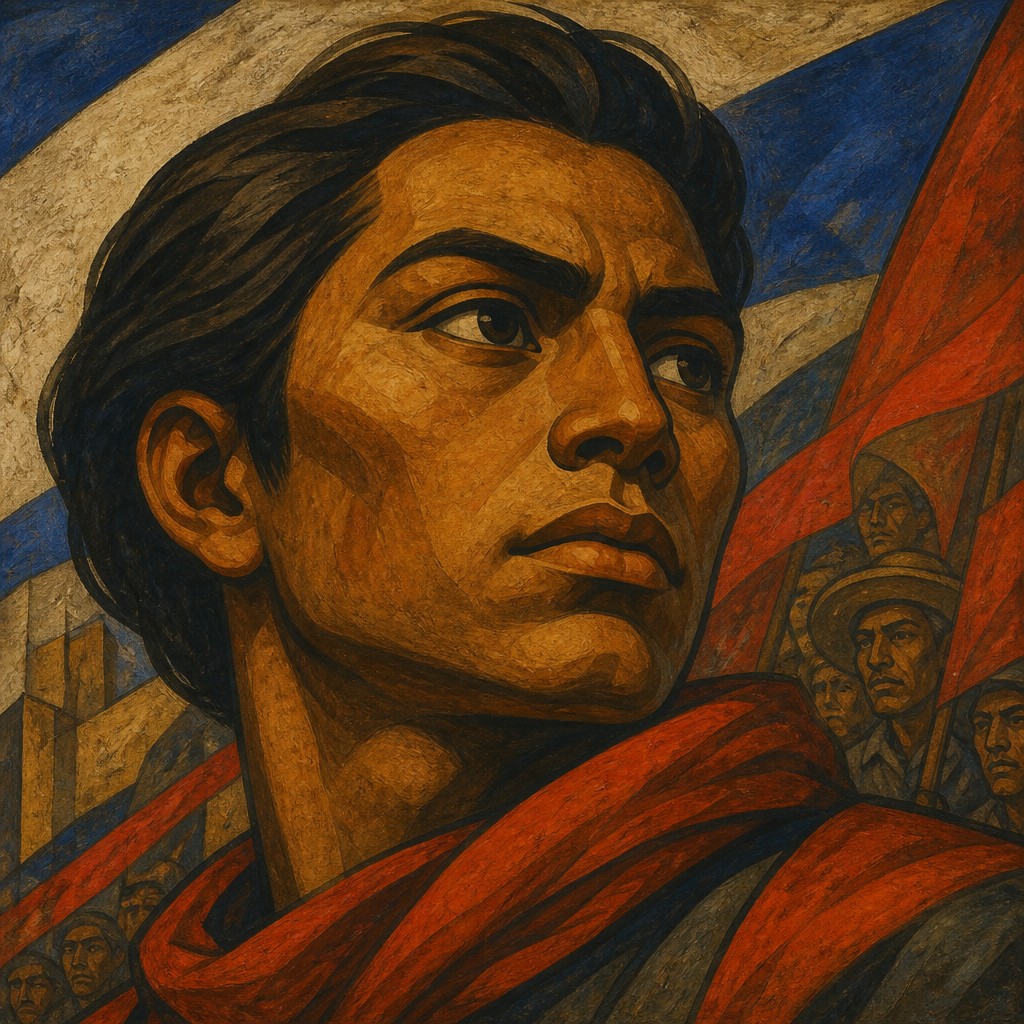 AI-generated
 AI-generated
 AI-generated
Mexican Muralism was a movement of large-scale public mural painting that emerged in Mexico following the Mexican Revolution (1910–1920), intended to forge a unified national identity and educate a largely illiterate public through vivid, accessible visual storytelling on the walls of government buildings, schools, and public institutions. It was actively sponsored by the postrevolutionary government, particularly Education Minister José Vasconcelos, who saw mural commissions as a tool of nation-building.
The movement's three most celebrated figures — Diego Rivera, José Clemente Orozco, and David Alfaro Siqueiros, often called Los Tres Grandes — each brought a distinct sensibility. Rivera, who had absorbed Cubism during years in Paris, developed a sweeping, densely populated narrative style celebrating indigenous heritage, labor, and revolutionary history. Orozco painted a bleaker, more expressionistic vision of civilization, violence, and industrial modernity. Siqueiros was the most politically radical and technically experimental, using industrial paints and spray equipment to push mural technique in new directions.
Muralists drew on pre-Columbian Aztec and Maya imagery, colonial history, and contemporary industrial and agricultural labor, reviving the Renaissance technique of true fresco — pigment applied directly to wet plaster — while filling their walls with unmistakably modern, often explicitly leftist political content.
The movement rebelled against the elitism of European-oriented academic art made for private collectors, insisting instead that art belonged in public space, in service of the public good, and legible to viewers regardless of literacy or education. Many of the muralists held Communist or socialist sympathies, and their work frequently critiqued capitalism, the Catholic Church's historical role, and colonial exploitation while celebrating indigenous heritage and organized labor.
Mexican Muralism matters because it demonstrated, on a grand scale, that modern art could be simultaneously formally ambitious, historically informed, and directly engaged with mass politics. Its influence extended well beyond Mexico's borders, into the United States and across Latin America, establishing a durable model for publicly funded, socially engaged mural art that persists today.
What defines Mexican Muralism
Monumental public scale
Murals covered entire walls, ceilings, and stairwells of government buildings, schools, and public institutions, designed to be seen by mass audiences rather than housed in private collections.
True fresco technique
Many murals were painted in true fresco, pigment applied directly into wet plaster, a durable Renaissance-era method the muralists revived and adapted for modern political content.
Sweeping historical narrative
Murals often told extended, didactic stories of Mexican history — conquest, colonization, revolution — arranged across multiple connected wall surfaces like sequential chapters.
Indigenous and pre-Columbian imagery
Aztec and Maya visual references, alongside indigenous peoples themselves, were foregrounded as sources of national identity and pride, countering centuries of colonial erasure.
Bold, simplified figural forms
Figures were often rendered with strong outlines and simplified, monumental volume, reflecting Rivera's Cubist training reapplied to legible, public-facing narrative painting.
Overt political and social content
Murals frequently celebrated labor, indigenous people, and revolutionary struggle while criticizing capitalism, the Church, and colonial power, reflecting the artists' leftist political commitments.
History
Mexican Muralism emerged directly out of the aftermath of the Mexican Revolution, when Education Minister José Vasconcelos initiated a mural program in the early 1920s to build a unified national identity through art accessible to a largely illiterate population, deliberately favoring indigenous and folk traditions over imported European academicism. Diego Rivera, who had spent years absorbing Cubism in Paris, returned to Mexico and became the program's most prolific figure, painting extensive fresco cycles for the Secretaría de Educación Pública and the National Palace in Mexico City.
In 1922–23, Rivera, Siqueiros, Orozco, and other artists formed the Sindicato de Obreros Técnicos, Pintores y Escultores, a revolutionary artists' union, issuing a manifesto declaring that art should serve the working public rather than private patrons. Orozco developed a darker, more expressionist vision, later carrying his mural practice to the United States, including The Epic of American Civilization at Dartmouth College. Siqueiros, the most politically militant of the three, experimented with industrial materials and techniques and painted murals in both Mexico and Los Angeles.
Rivera's international reputation grew further through controversial U.S. commissions, most famously a 1933 mural for Rockefeller Center in New York that was destroyed in 1934 after Rivera refused to remove a portrait of Lenin — an episode that became one of the most notorious controversies in twentieth-century American art patronage. Rivera later repainted a version of the composition in Mexico City as Man, Controller of the Universe.
The movement's public, politically engaged model directly influenced Depression-era mural programs in the United States, including the WPA's Federal Art Project, and decades later shaped the Chicano Muralism movement in California and the American Southwest. Mexican Muralism's dominance within Mexican art gradually waned by the 1950s as the founding generation aged and a younger cohort of Mexican artists pushed toward different, less overtly muralist directions.
Key works
| Work | Artist | Year | Why it matters |
|---|---|---|---|
| Man, Controller of the Universe | Diego Rivera | 1934 | A repainted version of Rivera's destroyed Rockefeller Center mural, fusing technology, labor, and revolutionary politics into one sweeping composition. |
| Detroit Industry Murals | Diego Rivera | 1933 | A mural cycle celebrating American industrial labor, painted for the Detroit Institute of Arts and among Rivera's most acclaimed U.S. commissions. |
| The Epic of American Civilization | José Clemente Orozco | 1934 | A mural cycle at Dartmouth College tracing civilization from pre-Columbian myth through conquest to industrial modernity. |
| Portrait of the Bourgeoisie | David Alfaro Siqueiros | 1940 | A politically charged mural using experimental industrial materials, painted for the Mexican Electricians' Syndicate building. |
How to make art in this style
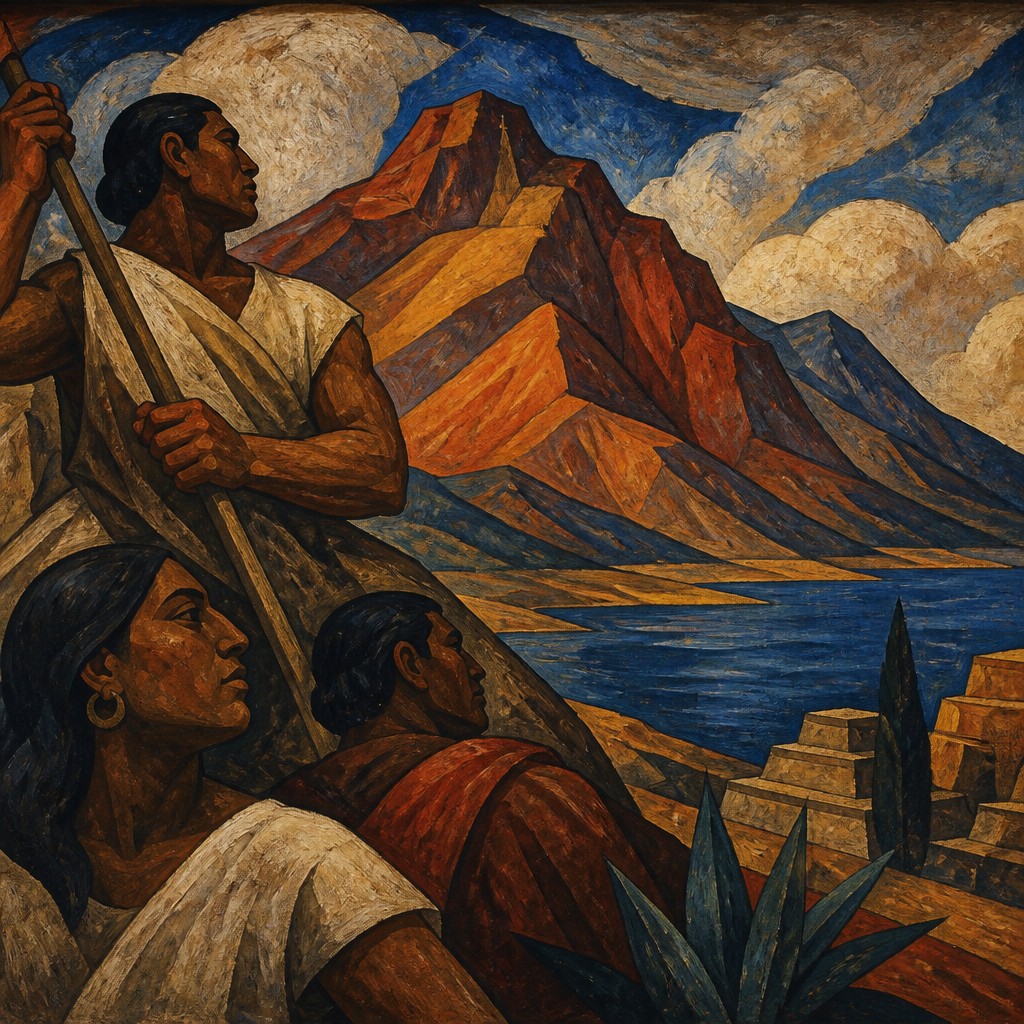
Palette. Favor warm earth tones — ochre, terracotta, burnt sienna — combined with bold primary reds, golds, and blues for emphasis. Fresco technique naturally produces slightly chalky, matte color; even in other media, avoid glossy or high-chroma effects that would undercut the earthbound, monumental feel.
Composition. Work at a large scale and think in tiers or registers, arranging figures and scenes as if telling a sequential historical narrative across a wall. Group multiple figures into dense, interlocking compositions rather than isolating a single subject — crowds, laborers, and historical tableaux are characteristic.
Technique. Use strong, confident outlines and simplified, monumental volumes rather than fine naturalistic detail. If working at mural scale, true fresco (pigment into wet plaster) is the historically authentic method, though large-scale acrylic or mural paint can achieve a comparable flat, durable finish. Let Cubist-influenced structuring of space — overlapping planes, faceted background elements — organize complex multi-figure scenes.
Subjects. Draw on labor, indigenous heritage, historical and revolutionary narrative, and industrial modernity. Include specific, individualized figures within the larger crowd rather than generic types, and consider how pre-Columbian visual motifs — geometric patterning, stepped forms, stylized deities — might anchor the composition in a longer cultural history.
Intent. Design the image to be legible and meaningful to a broad public audience passing by, not a private collector studying it up close — clarity of story and emotion should take priority over subtlety.
Legacy
Mexican Muralism established public, politically engaged mural painting as a major twentieth-century art form. Its model directly inspired the WPA's Depression-era mural programs in the United States, and decades later fed into the Chicano Muralism movement that flourished across California and the American Southwest from the 1960s onward, carrying its combination of public accessibility and political voice into new communities.
The movement's insistence that art belongs in public space, addressing public concerns, remains a foundational reference point for muralists, community art programs, and politically engaged street art around the world today. Rivera's international profile, alongside that of his wife Frida Kahlo, brought unprecedented global visibility to Mexican art in the early twentieth century.
Beyond murals specifically, the movement's fusion of indigenous heritage with modernist formal ambition shaped how subsequent generations of Latin American artists approached questions of national identity and history. Its willingness to make monumental art serve explicit political ends continues to inform debates about art's proper relationship to power, propaganda, and public education.
Frequently asked questions
Who are the "Los Tres Grandes" of Mexican Muralism?
The three most celebrated Mexican muralists are Diego Rivera, José Clemente Orozco, and David Alfaro Siqueiros, each known for a distinct style but united by a commitment to large-scale, publicly accessible, politically engaged mural painting.
What is Mexican Muralism?
Mexican Muralism was a government-sponsored movement of monumental public murals in postrevolutionary Mexico, depicting national history, indigenous heritage, and revolutionary politics on the walls of public buildings from the 1920s onward.
Why was Diego Rivera's Rockefeller Center mural destroyed?
Rivera included a portrait of Vladimir Lenin in the 1933 mural, and when he refused Rockefeller's request to remove it, the completed mural was destroyed in 1934. Rivera later repainted a version of it in Mexico City.
How did Mexican Muralism influence American art?
It directly inspired the WPA's Depression-era mural programs in the United States and, decades later, the Chicano Muralism movement in California and the Southwest, both of which adopted its public, politically engaged approach.