 Art
Art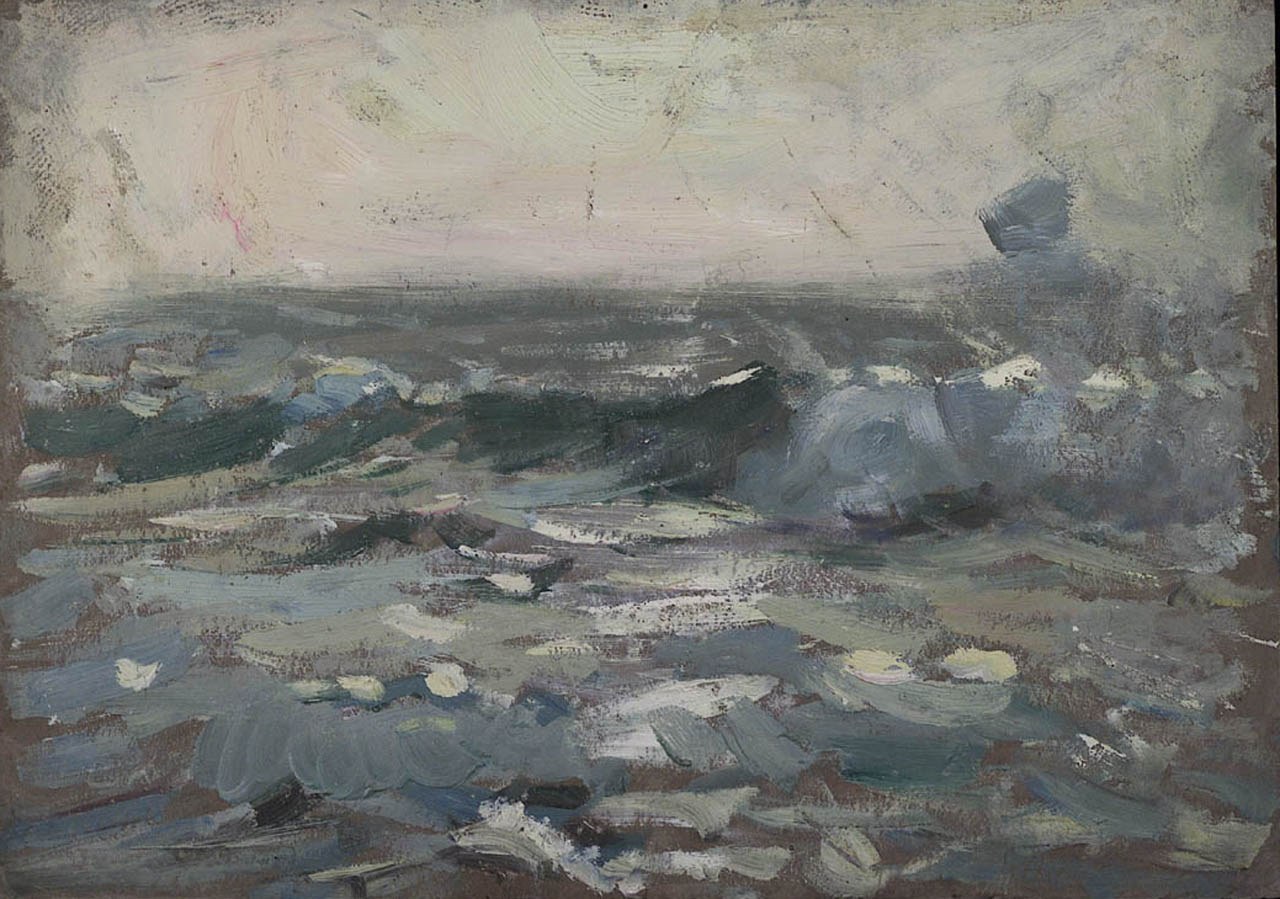
Seascape from Cobo Bay RMG BHC0008. Image: John Everett · Public domain · Wikimedia Commons, accessed 2026-08-04
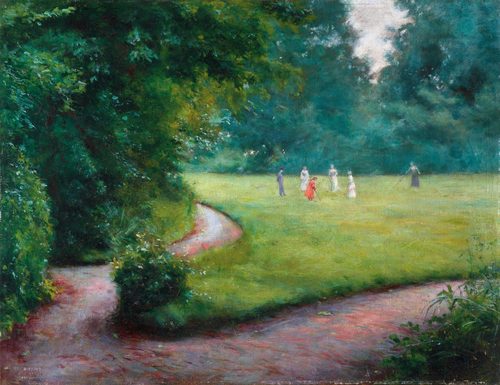
Tonalism emerged in the United States in the 1870s and flourished through the early 1900s as landscape painters turned away from precise, detailed depiction toward soft, atmospheric mood, often centered on the diffused light of dawn, dusk, or fog. Rather than the bright, broken color of Impressionism developing in France at roughly the same time, Tonalist painters built their canvases from closely related, muted tones, greys, browns, deep greens, and soft golds, veiling landscape forms in haze and shadow so the overall mood mattered more than legible detail.
Visually, a Tonalist painting typically presents a low-contrast, softly blurred landscape, a lone tree, a distant farmhouse, still water, rendered almost as a silhouette against a glowing, indistinct sky. Edges dissolve into one another; the canvas often reads first as an overall harmony of color and value, with specific forms only gradually emerging on closer looking. Painters frequently worked from memory or invention in the studio rather than directly outdoors, composing landscapes as much from feeling as from observed fact.
The movement rebelled against both the crisp, highly detailed naturalism of earlier American landscape painting, particularly the Hudson River School's grand, sharply rendered vistas, and against the brighter, more broken color emerging from French Impressionism. Tonalists instead pursued a quieter, more introspective mode indebted to the muted palettes of the French Barbizon painters and to the delicate, near-abstract harmonies of James McNeill Whistler, who described his own paintings using musical terms like "nocturne" and "arrangement" to emphasize mood over subject.
Tonalism matters as a distinctly American answer to the era's landscape painting question, prioritizing psychological atmosphere and personal, often spiritual feeling over topographical accuracy at a moment when the country's rapid industrial expansion made such quiet, contemplative landscapes feel newly valuable. Its emphasis on suggestion over description also helped open a path toward American modernism's later embrace of abstraction and mood over description.
What defines Tonalism
Muted, closely related tones
Paintings are built from a narrow range of related colors, often dominated by grey, brown, deep green, or soft gold, avoiding strong contrast or bright, unmixed hues in favor of overall harmony.
Soft, dissolved edges
Forms blur into their surroundings rather than being sharply outlined, giving landscapes a hazy, half-remembered quality closer to dusk vision than daylight clarity.
Twilight, dawn, and fog
A strong preference for low-light, atmospheric conditions, sunset, moonlight, morning mist, over the bright midday clarity favored by many Impressionist and academic landscape painters.
Emphasis on mood over description
The overall emotional atmosphere of a scene mattered more than precise topographical or botanical accuracy, with paintings often composed partly from memory or imagination rather than direct observation.
Restrained, minimal composition
Landscapes were often simplified to a few large, softly massed shapes, a horizon line, a stand of trees, a body of still water, rather than busy or detailed arrangements.
Musical and poetic titling
Following Whistler's example, works were sometimes titled with musical terms, nocturne, harmony, arrangement, signaling that mood and formal balance mattered as much as depicted subject.
History
Tonalism developed gradually through the 1870s and 1880s among American landscape painters influenced by the muted, poetic naturalism of the French Barbizon School, whose painters, including Jean-François Millet and Théodore Rousseau, had already turned from precise detail toward mood and atmosphere earlier in the century. George Inness, initially trained in the detailed Hudson River School tradition, became the movement's central American figure, gradually loosening his brushwork and narrowing his palette from the 1860s onward under Barbizon influence, along with his own Swedenborgian spiritual beliefs, which shaped his interest in landscape as a vehicle for inner, mystical feeling rather than literal record.
James McNeill Whistler, working largely in London and Paris, developed a parallel and influential strand of tonal harmony, applying musical titles to his moody, atmospheric river and nocturne paintings and explicitly arguing that a painting's arrangement of tone and color mattered more than its represented subject, an idea that resonated strongly with American Tonalist painters even though Whistler worked mostly abroad.
Through the 1880s and 1890s, the style spread among American landscape painters including Dwight William Tryon, Ralph Blakelock, and Alexander Helwig Wyant, often centered around quiet rural scenes in the Northeast. The style found particular favor with American collectors seeking a contemplative, refined alternative to both academic detail and the brighter, more radical color of Impressionism, and Tonalist paintings sold well through the period's major galleries and exhibitions.
By the 1910s, Tonalism's soft, muted mood began to feel dated against the brighter palettes of American Impressionism and the arrival of more radical European modernism at the 1913 Armory Show. The style faded from mainstream fashion by around 1915, though its emphasis on mood, restraint, and tonal harmony over description continued to echo in later American landscape and even early abstract painting.
Key works
| Work | Artist | Year | Why it matters |
|---|---|---|---|
| The Home of the Heron | George Inness | 1893 | A hazy, glowing marsh landscape typical of Inness's mature Tonalist style, dissolving specific detail into overall atmospheric mood. |
| Nocturne: Blue and Gold - Old Battersea Bridge | James McNeill Whistler | 1872 | A moody river nightscape reduced to simplified silhouetted forms and closely related blue and gold tones. |
How to make art in this style
Palette. Limit yourself to a narrow, closely related range of tones, muted greens, warm browns, soft greys, and dusky gold, avoiding bright, saturated, or strongly contrasting color. Think of the whole canvas as one dominant color harmony rather than a collection of locally accurate hues.
Composition. Simplify the landscape to a few large, softly massed shapes, a horizon, a stand of trees, still water, and avoid busy detail or many competing focal points. A low, quiet horizon line and generous sky or atmospheric space often serve the mood better than a tightly packed composition.
Technique. Work with soft, blended edges rather than crisp outlines, letting forms emerge gradually from the overall tonal field rather than standing out sharply. Glazing thin, semi-transparent layers of paint over a toned ground can help build the hazy, luminous depth characteristic of the style; avoid heavy impasto or strongly visible brushwork, which pulls attention away from overall mood.
Light. Favor low, diffused light conditions, dawn, dusk, moonlight, fog, or overcast weather, over bright midday sun. Let a single, soft light source unify the whole scene rather than introducing multiple strong highlights.
Subjects. Choose quiet, contemplative subjects, still ponds, distant tree lines, solitary structures, empty fields, and resist the temptation to add narrative incident or busy activity. The goal is an overall mood of stillness and reflection, closer to a visual equivalent of a quiet piece of music than to a documentary record of a place.
Legacy
Tonalism's emphasis on mood, restraint, and tonal harmony over precise description provided an important bridge between nineteenth-century landscape realism and the more radical simplifications of early American modernism. Painters associated with later American modernist and abstract movements, including Arthur Dove, absorbed something of Tonalism's willingness to prioritize feeling and formal harmony over literal representation, even as their own work moved further from recognizable landscape.
The movement's quiet, atmospheric aesthetic also fed into American photography, particularly the soft-focus, moody landscapes of the Pictorialist photography movement active around the same period, which shared Tonalism's interest in atmosphere over sharp documentary clarity. Whistler's insistence that a painting's arrangement of tone and color could be its own subject, independent of represented content, anticipated formalist arguments that would become central to twentieth-century abstract art criticism.
Tonalism experienced a significant critical and market revival beginning in the late twentieth century, as collectors and museums reassessed a body of work that had been somewhat overshadowed by the brighter, more famous achievements of French and American Impressionism. Today its hazy, contemplative landscapes are valued precisely for the quiet, meditative quality that once made them seem old-fashioned against Impressionism's brighter energy.
Frequently asked questions
What is Tonalism?
Tonalism is an American landscape painting movement, active roughly from the 1870s to the 1910s, characterized by muted, closely related colors, soft dissolved edges, and an emphasis on atmospheric mood, particularly at dawn, dusk, or in fog, over precise detail.
Who are the major Tonalist painters?
George Inness is generally considered the movement's central American figure, alongside James McNeill Whistler, Dwight William Tryon, Ralph Blakelock, and Alexander Helwig Wyant.
What is the difference between Tonalism and Impressionism?
Tonalism uses muted, closely related tones and soft, blurred forms to evoke quiet mood, often built partly from memory in the studio. Impressionism uses bright, unmixed color and visible broken brushwork to capture specific, often sunlit outdoor light directly observed in the moment.
What influenced Tonalism?
The movement drew on the muted naturalism of the French Barbizon School and on James McNeill Whistler's tonal harmonies and musical titling, which argued that a painting's arrangement of color and tone could matter more than its literal subject.
Why did Tonalism decline in popularity?
By the 1910s its quiet, muted mood felt increasingly old-fashioned against the brighter color of American Impressionism and the arrival of more radical European modernism at the 1913 Armory Show, though the style saw a significant critical revival later in the twentieth century.