 Art
Art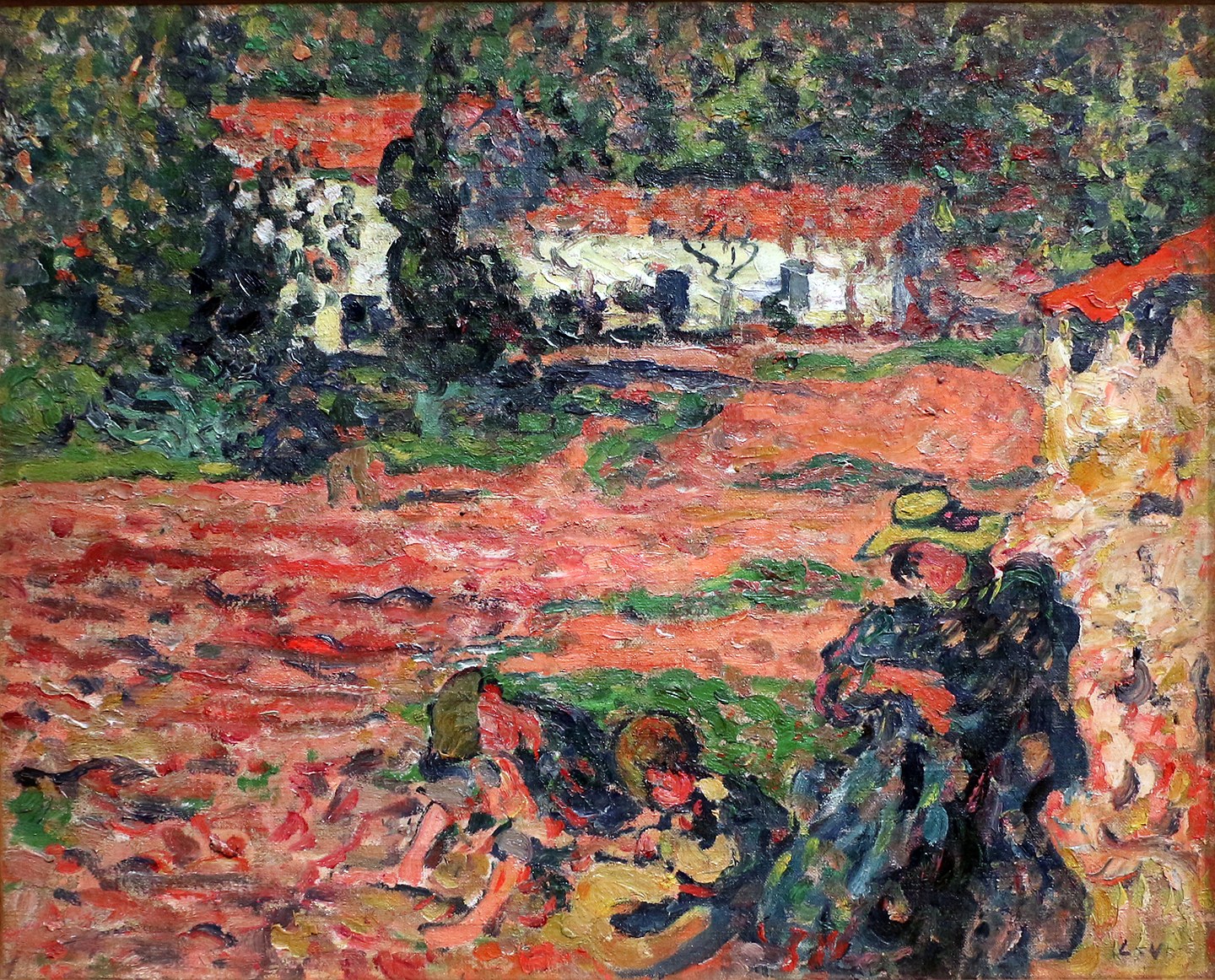
Fauve Landscape. Image: Louis Valtat · CC BY 3.0 · Wikimedia Commons, accessed 2026-08-04
Fauvism was a short-lived but pivotal movement that emerged in Paris around 1904 and burst into public view at the 1905 Salon d'Automne, where a room of paintings by Henri Matisse, André Derain, Maurice de Vlaminck, and several colleagues used color so intense and unnatural that critic Louis Vauxcelles, spotting a Renaissance-style bronze sculpture displayed amid the canvases, reportedly exclaimed "Donatello chez les fauves" — "Donatello among the wild beasts." The nickname stuck, and Fauvism (from fauves, "wild beasts") entered the language of art history.
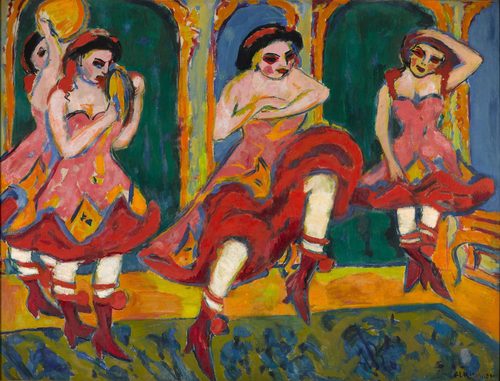
The style's central idea was simple but radical: color did not need to describe the world accurately. A tree trunk could be painted blue, a face could be streaked with green, a sky could be scarlet, so long as the color served the painting's emotional and structural logic rather than optical fact. Fauvist canvases apply paint in bold, often unmixed strokes straight from the tube, arranged in flat planes with simplified forms and minimal shading, frequently pairing complementary colors — red against green, blue against orange — for maximum visual charge.
Fauvism built directly on Post-Impressionist precedent, particularly Vincent van Gogh and Paul Gauguin's use of color as an expressive and symbolic tool rather than a descriptive one, and on Neo-Impressionist divisionism, whose systematic dots of pure pigment Matisse experimented with directly before developing his own broader, flatter style. The movement rebelled against both academic naturalism and Impressionism's subtler, optically accurate color mixing, insisting instead on color as raw sensation.
Fauvism matters as the opening act of twentieth-century avant-garde painting: it was the first movement to treat color as fully independent of representation, a move that opened the door to the German Expressionists, who saw Fauvist canvases and recognized a kindred freedom, and, more distantly, to abstraction itself. Though the core group held together for barely three years before its members scattered toward Cubism, continued Expressionist painting, or decades of further color experimentation, Fauvism's brief, concentrated intensity gave it an outsized influence on everything that followed.
What defines Fauvism
Pure, Unmixed Color
Paint is applied straight from the tube in saturated hues, with minimal blending, so individual strokes of color remain visually distinct on the canvas.
Non-Naturalistic Color Choices
Color is chosen for emotional and compositional effect rather than accuracy — a face might be green, a tree trunk blue — breaking decisively from color's traditional descriptive role.
Flat, Simplified Forms
Objects and figures are reduced to bold, simplified shapes with strong outlines and little traditional shading or modeling, flattening the sense of three-dimensional space.
Visible, Energetic Brushwork
Loose, loaded strokes remain clearly visible on the canvas surface, giving the paintings a sense of speed and physical directness.
High-Contrast Complementary Color
Fauvist painters frequently juxtapose complementary colors — red and green, blue and orange — placed directly next to each other for maximum visual vibration.
Everyday Subjects Transformed
Ordinary subjects like landscapes, portraits, and interiors become vehicles for radical color experimentation, the subject itself often secondary to the color relationships it allows the painter to explore.
History
Fauvism's immediate roots lie in Post-Impressionism, especially Van Gogh's and Gauguin's use of color as an expressive rather than purely descriptive tool, and in Neo-Impressionist divisionism, which Henri Matisse experimented with directly around 1904 while working alongside Paul Signac. In the summer of 1905, Matisse and André Derain painted together in the Mediterranean fishing town of Collioure, pushing color further away from naturalism than either had gone before, and the paintings that resulted became the movement's founding statement.
That autumn, at the 1905 Salon d'Automne in Paris, Matisse, Derain, Maurice de Vlaminck, and other painters showed a room of intensely colored canvases that shocked critics and public alike. Louis Vauxcelles' offhand remark comparing the room to a den of "wild beasts" gave the group its lasting, originally derisive name. Matisse's "Woman with a Hat," shown at the same Salon, became a particular flashpoint, its loosely brushed, non-naturalistic color drawing public ridicule and private fascination in roughly equal measure.
Fauvism's cohesion as a recognizable group was brief. By 1906 and 1907, its members had begun diverging: Georges Braque, absorbing Paul Cézanne's structural approach to form after a major Cézanne retrospective, moved toward the analytical concerns that would soon become Cubism, while Derain, who had also studied Cézanne closely, pursued a more independent path of his own. Vlaminck continued painting expressive, high-color landscapes in a more personal vein. Matisse alone carried the Fauvist commitment to color furthest and longest, developing it over the following decades into the flat, decorative compositions and, eventually, the cut-paper works of his later career.
Though the movement itself lasted barely three years as an organized tendency, its impact was immediate and international: German Expressionist painters, encountering Fauvist color firsthand, recognized in it a permission to abandon naturalistic color themselves, carrying the Fauvist breakthrough directly into the next major current of early-twentieth-century painting.
Key works
| Work | Artist | Year | Why it matters |
|---|---|---|---|
| Woman with a Hat | Henri Matisse | 1905 | Its loosely brushed, non-naturalistic color caused a public scandal at the 1905 Salon d'Automne and became a defining image of the new style. |
| The Green Line (Portrait of Madame Matisse) | Henri Matisse | 1905 | A portrait bisected by a bold stripe of green down the center of the face, showing Fauvist color used structurally rather than descriptively. |
| Charing Cross Bridge | André Derain | 1906 | Part of a London series in which Derain reimagined the city's fog and river in explosive, unnaturalistic color. |
| Le Bonheur de vivre | Henri Matisse | 1906 | A large, decorative composition of figures in a landscape that extended Fauvist color into a more ambitious, sustained statement. |
How to make art in this style
Creating Fauvist-Style Work Today
Palette: use pure, highly saturated color straight from the tube or its digital equivalent, keeping mixing to a minimum so individual colors stay vivid and distinct. Favor bold complementary pairings — red against green, orange against blue, yellow against violet — placed directly next to each other rather than blended, since the vibration between opposing hues is central to the effect.
Composition: simplify forms into clear, flat shapes with confident outlines, and don't rely on traditional modeling or shading to suggest volume — let color contrast, rather than light and shadow, do the work of describing form and space. Keep compositions relatively uncomplicated, since the color itself carries most of the visual charge.
Technique: apply paint quickly and directly, in loaded, visible strokes, rather than smoothing or blending toward a polished finish. Let color choices depart freely from what a subject "actually" looks like — a shadow can be blue, a lawn can be orange — basing the decision on the emotional temperature and compositional balance you want rather than on optical accuracy.
Subjects: landscapes, portraits, and interiors are the classic Fauvist territory, chosen less for their inherent drama than for how much color freedom they allow. A good practical exercise is to paint a familiar scene twice: once in observed, naturalistic color, and once assigning each area a bold, invented hue based purely on how you want the composition to feel.
Legacy
Fauvism's central claim — that color could operate independently of naturalistic description — became one of the foundational permissions of twentieth-century painting. German Expressionist groups like Die Brücke, who encountered Fauvist work directly, took its liberated color as license for their own emotionally charged palettes, carrying the breakthrough into a harder-edged, more anguished register. The movement's emphasis on flat color and simplified form also fed indirectly into the development of abstraction, as later painters pushed color further away from any representational anchor at all.
Henri Matisse's own long career kept Fauvist color sensibility alive and evolving for decades after the original group dissolved, culminating in the boldly colored cut-paper compositions of his final years, which remain among the most widely reproduced and beloved works in modern art. Fauvism's example — that intensity and joy in color are legitimate ends in themselves — continues to inform graphic design, textile and fashion pattern, and any visual practice that treats saturated color as an expressive tool rather than a descriptive one. Its brief, concentrated burst of activity is now recognized as the opening chapter of the modern avant-garde, the first movement to fully sever color from its traditional representational duty.
Frequently asked questions
What is Fauvism?
Fauvism was a short-lived early-twentieth-century art movement, centered in Paris around 1905, defined by its use of intensely saturated, non-naturalistic color applied in bold, flat planes.
What does 'Fauvism' mean?
The name comes from the French fauves, meaning 'wild beasts,' a term a critic used dismissively to describe the movement's shockingly intense color when it debuted at the 1905 Salon d'Automne.
Who started Fauvism?
Henri Matisse and André Derain developed the style together in the summer of 1905 while painting in Collioure, France, alongside colleagues including Maurice de Vlaminck.
What is the difference between Fauvism and Expressionism?
Fauvism, centered in France, generally used bold color toward decorative and joyful ends, while German Expressionism, which it directly influenced, pushed similarly intense color and distorted form toward darker, more anxious emotional territory.
How long did Fauvism last?
Fauvism held together as a recognizable group for only about three years, from roughly 1905 to 1907 or 1908, before its members moved toward Cubism, continued Expressionism, or their own individual styles.