 Art
Art
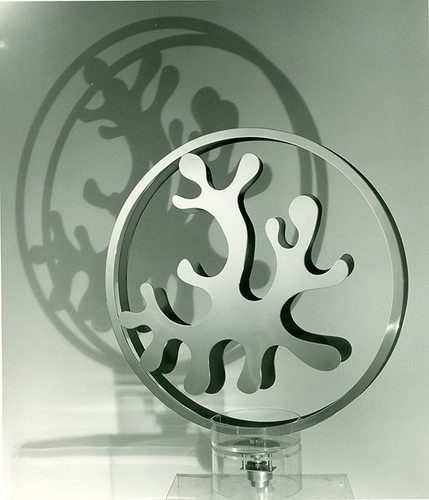
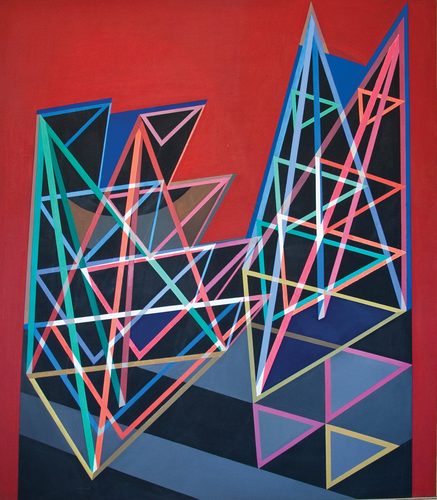
"Avaruuskostruktio", 1969.. Image: Johnny Hday · CC BY-SA 4.0 · Wikimedia Commons, accessed 2026-08-04
Pop Art turned the imagery of advertising, comic books, packaging, and celebrity culture into the subject matter of fine art, using techniques borrowed directly from commercial printing — flat color, mechanical repetition, silkscreen, and the dot patterns of newspaper reproduction. It emerged first in Britain in the mid-1950s, where the artists and critics of the Independent Group discussed American consumer culture with a mixture of fascination and distance; the critic Lawrence Alloway is generally credited with popularizing the term "pop art" around this time. Richard Hamilton's 1956 collage Just What Is It that Makes Today's Homes So Different, So Appealing?, made for the exhibition This Is Tomorrow, is widely cited as the movement's first fully realized image, packing a modern living room with a bodybuilder, a pin-up, a television, and a giant lollipop-shaped "POP."
American Pop developed somewhat independently through the late 1950s and 1960s, centered in New York. Andy Warhol repeated familiar consumer and celebrity images — Campbell's soup cans, Coca-Cola bottles, Marilyn Monroe, Elvis Presley — through mechanical silkscreen printing, often across grids of identical or near-identical panels, treating fame and branding as interchangeable subjects. Roy Lichtenstein enlarged single frames from comic strips into large-scale paintings, hand-painting the Ben-Day dot patterns of cheap newsprint to achieve a deliberately mechanical, impersonal look. Claes Oldenburg built oversized soft sculptures of hamburgers, cake slices, and typewriters, and later monumental steel versions of objects such as the clothespin, turning mundane consumer objects into monumental, faintly absurd icons.
Pop Art rebelled directly against the seriousness, emotional intensity, and hand-worked gesture of Abstract Expressionism, which had dominated American painting through the 1950s. Where Abstract Expressionists sought to express an interior psychological state through abstraction, Pop artists looked outward, taking the most public, mass-produced, and seemingly disposable imagery of postwar life as worthy of the same scale and status as history painting. Pop Art matters because it collapsed the boundary between "high" and "low" culture more decisively than any prior movement, and because its visual strategies — repetition, flatness, appropriation of commercial technique — remain the basic vocabulary of image-based contemporary art.
What defines Pop Art
Mass-media subject matter
Pop Art draws directly on advertising, comic strips, celebrity photographs, and consumer packaging rather than inventing new imagery or looking to traditional fine-art subjects.
Flat, saturated color
Colors are applied in flat, unmodulated areas, often the limited palette of commercial printing, rather than blended or shaded to suggest volume or atmosphere.
Mechanical reproduction technique
Silkscreen printing, stenciling, and hand-rendered Ben-Day dots mimic the look of mass production, deliberately minimizing visible traces of the artist's individual hand.
Repetition and the grid
Images are frequently repeated across a canvas or series in near-identical rows, echoing the visual logic of advertising and product branding.
Scale shift
Everyday, throwaway objects and images are blown up to monumental size, in painting or in oversized soft sculpture, forcing a second look at what is normally ignored.
Ironic, ambivalent tone
Pop Art rarely states outright whether it is celebrating or critiquing consumer culture, maintaining a deadpan surface that leaves the viewer to supply the judgment.
History
Pop Art's earliest stirrings came from the Independent Group, a circle of British artists, architects, and critics meeting at London's Institute of Contemporary Arts in the mid-1950s to discuss American advertising, science fiction, and consumer design with unusual seriousness for the time. Richard Hamilton's 1956 collage Just What Is It that Makes Today's Homes So Different, So Appealing?, produced for the group exhibition This Is Tomorrow, distilled these discussions into a single dense image and is generally treated as Pop Art's first landmark work; critic Lawrence Alloway had already begun using the term "pop art" to describe mass-produced commercial imagery around this period.
American Pop developed through the late 1950s and crystallized in the early 1960s in New York. Andy Warhol, previously a successful commercial illustrator, began painting comic and advertising imagery around 1960–61 and had his breakthrough with the Campbell's Soup Cans series in 1962, followed quickly by silkscreened celebrity portraits. Roy Lichtenstein began his comic-derived paintings around the same time, exhibiting with dealer Leo Castelli from 1962. Claes Oldenburg staged The Store in 1961, a storefront installation selling his own painted plaster sculptures of food and consumer goods, before moving into the giant soft sculptures for which he became best known.
Pop Art was cemented as a major movement through a series of landmark group exhibitions and gallery shows in the early-to-mid 1960s in both New York and London, and quickly became the most publicly visible and commercially successful new art movement of the decade, with figures like Warhol achieving genuine mainstream celebrity. By the early 1970s, as Minimalism and Conceptual Art rose to critical prominence, Pop Art's initial momentum as a defined movement slowed, though its central artists continued working in related veins for decades, and its imagery had already become permanently absorbed into the broader visual culture it originally drew from.
Key works
| Work | Artist | Year | Why it matters |
|---|---|---|---|
| Just What Is It that Makes Today's Homes So Different, So Appealing? | Richard Hamilton | 1956 | A dense collage combining a bodybuilder, a pin-up, a television, and consumer branding, widely regarded as Pop Art's first landmark image. |
| Campbell's Soup Cans | Andy Warhol | 1962 | A series of paintings depicting 32 varieties of a familiar supermarket product, treating branding and repetition as legitimate subject matter. |
| Marilyn Diptych | Andy Warhol | 1962 | A silkscreened grid of repeated Marilyn Monroe portraits fading from bright color into black and white, linking celebrity, mass reproduction, and mortality. |
| Whaam! | Roy Lichtenstein | 1963 | A large-scale painting derived from a war-comic panel, rendered with hand-painted Ben-Day dots to mimic cheap print reproduction. |
| Floor Cake | Claes Oldenburg | 1962 | A giant soft sculpture of a slice of cake, turning an ordinary consumable into a monumental, faintly absurd object. |
How to make art in this style
Working in a Pop Art Style
Palette: Use bold, saturated, flat color straight from the tube or a limited commercial palette — primary red, yellow, and blue, plus black and white — avoiding blended shading or atmospheric color. Think in terms of a handful of flat hues rather than a full tonal range.
Composition: Center the work on a single, instantly recognizable image or object — a product, a celebrity face, a comic-strip panel — presented large, cropped tightly, and isolated against a plain or patterned background rather than a naturalistic setting. Repetition across a grid, echoing product branding or a printed sheet, is a strong compositional option.
Technique: Favor flat, even application of color with hard, clean edges rather than visible, expressive brushwork. Try mimicking commercial printing methods directly: masking for crisp color boundaries, stenciling, or hand-rendering the dot pattern of cheap newspaper reproduction at a large, exaggerated scale. Keep any outline heavy, dark, and continuous, closer to a printed line than a painted gesture.
Subjects: Draw from consumer packaging, advertising, comic strips, and celebrity or media imagery — subjects that were, at the time, considered too ordinary or disposable for serious art. Choose images already circulating in mass culture rather than inventing new ones.
Process: Resist the urge to add emotional or gestural "artistic" touches. The flatness and apparent impersonality are the point — let the image's own cultural weight, not visible brushwork, carry the meaning.
Legacy
Pop Art permanently changed what counted as legitimate subject matter for fine art, establishing that advertising, packaging, celebrity, and mass reproduction were as worthy of serious treatment as any traditional subject. That premise underlies enormous portions of contemporary art, from appropriation art's direct engagement with existing images to street art's use of stencil and repetition to draw on commercial visual language.
Andy Warhol's example — treating fame, branding, and repetition as both subject and method, while blurring the line between artist and celebrity — reshaped how artists relate to media and public image, an influence still visible in how contemporary artists build and manage their own public profiles. Warhol's Factory studio, which operated more like a commercial production house than a traditional artist's studio, anticipated the collaborative, brand-like structure of many contemporary art practices and design studios.
Pop Art's visual vocabulary — flat color, bold outline, dot-screen texture, repeated grids — remains instantly recognizable and constantly reused across graphic design, advertising, fashion, and merchandise, in a kind of closed loop since Pop originally drew that vocabulary from commercial art in the first place. It remains one of the most commercially valuable and publicly beloved movements in the history of modern art, and its images continue to circulate as some of the most widely reproduced in visual culture.
Frequently asked questions
What is Pop Art?
Pop Art is a movement that emerged in Britain and the United States from the mid-1950s through the 1960s, turning advertising, comic strips, celebrity imagery, and consumer packaging into the subject matter of fine art.
Who started Pop Art?
Pop Art began with Britain's Independent Group in the mid-1950s, with Richard Hamilton's 1956 collage 'Just What Is It that Makes Today's Homes So Different, So Appealing?' widely cited as its first landmark work; American Pop, led by artists like Andy Warhol and Roy Lichtenstein, developed independently soon after.
What is the difference between British and American Pop Art?
British Pop Art tended to view American consumer culture from a curious, semi-outsider distance through collage and mixed media, while American Pop Art, made within the culture it depicted, was generally more direct, using commercial printing techniques like silkscreen at a larger, more confident scale.
What did Pop Art rebel against?
Pop Art rejected the emotional seriousness and hand-worked gesture of Abstract Expressionism, replacing personal expression with flat, mechanically reproduced imagery drawn from mass media and consumer culture.
What techniques do Pop artists use?
Pop artists commonly use silkscreen printing, flat unmodulated color, hard-edged outlines, and hand-rendered versions of commercial printing patterns like Ben-Day dots, deliberately minimizing visible brushwork.